
La storia ama presentarsi come progresso. Ma ogni tanto torna alle sue domande più antiche.
Domande elementari, che riguardano la sicurezza delle comunità e la sopravvivenza degli Stati.
Una di queste è semplice e terribile: che cosa si fa quando un regime diventa una minaccia permanente per sé stesso e per gli altri?
Gli antichi romani avevano una risposta molto chiara.
Nel II secolo avanti Cristo Roma e Cartagine avevano già combattuto due guerre devastanti. La seconda, quella di Annibale, aveva portato gli eserciti cartaginesi fino al cuore dell’Italia. Anche dopo la sconfitta definitiva, molti romani continuavano a considerare Cartagine un pericolo latente.
Non perché fosse ancora potente, ma perché esisteva.
Fra coloro che non avevano alcun dubbio su questo punto c’era uno dei senatori più rispettati della Repubblica, un uomo austero e inflessibile: Catone.
Catone concludeva molti dei suoi interventi con una formula diventata celebre:
Ceterum censeo Carthaginem esse delendam.
Per il resto, ritengo che Cartagine debba essere distrutta. Non era una provocazione retorica. Era una diagnosi politica. Catone riteneva che alcune rivalità storiche non potessero essere neutralizzate con trattati o compromessi diplomatici. Finché Cartagine esisteva, Roma non poteva sentirsi completamente al sicuro. Durante una missione diplomatica in Africa rimase colpito dalla vitalità della città cartaginese. Tornato a Roma portò in Senato un fico appena raccolto e lo mostrò ai senatori. Il frutto era ancora fresco. Il messaggio era semplice: Cartagine non era solo ricca. Era anche molto vicina.
Nel 146 a.C. quella convinzione diventò azione. Dopo un lungo assedio la città venne distrutta e la sua popolazione dispersa dall’esercito guidato da Scipio Aemilianus. Il mondo moderno guarda a quell’episodio con disagio. La civiltà contemporanea si fonda sull’idea opposta: gli Stati non devono essere eliminati ma integrati in un sistema internazionale regolato dal diritto. Eppure il problema che inquietava Catone non è mai scomparso. La storia moderna ha cercato di domarlo attraverso trattati, istituzioni multilaterali e diplomazia. Ma la questione di fondo — come trattare regimi percepiti come minacce permanenti — continua a riemergere.
Nel pensiero strategico contemporaneo questo dilemma è stato affrontato da diversi studiosi di politica internazionale. Tra i più influenti c’è Robert Kagan. Kagan sostiene da anni che l’ordine internazionale liberale non è una condizione naturale della politica mondiale. È un equilibrio fragile, sostenuto dalla potenza e dalla volontà politica delle democrazie. Quando queste smettono di difenderlo, emergono attori che contestano apertamente le regole del sistema. Secondo questa visione il mondo non è entrato in una fase “post-storica” dopo la Guerra fredda. È rimasto un sistema competitivo, in cui alcuni regimi costruiscono la propria legittimità su un antagonismo ideologico verso l’ordine internazionale esistente.
In questo quadro l’Iran è diventato uno dei casi più discussi.
La Repubblica islamica nata dalla rivoluzione del 1979 rappresenta un sistema politico singolare: una combinazione di istituzioni repubblicane formali e di autorità religiosa suprema. Nel corso degli anni questo assetto ha prodotto una tensione crescente tra la società iraniana e il potere. Movimenti studenteschi, proteste urbane e mobilitazioni femminili hanno mostrato quanto ampia sia ormai la distanza tra la società iraniana e l’ideologia del regime. Le repressioni sono state dure: arresti di massa, processi sommari, esecuzioni. Eppure ogni ciclo di proteste sembra indicare che l’adesione all’ideologia rivoluzionaria si sta progressivamente indebolendo.
Fra coloro che osservano questo fenomeno con particolare attenzione c’è Natan Sharansky.
Sharansky conosce bene la logica dei regimi ideologici. Dissidente sovietico, arrestato dal KGB nel 1977 e condannato ai gulag, trascorse anni in isolamento prima di essere liberato nel 1986 in uno scambio di prigionieri a Berlino. La sua analisi parte da un’intuizione semplice: i sistemi ideologici crollano quando la maggioranza della popolazione smette di credere all’ideologia ufficiale ma continua a obbedire solo per paura. Sharansky definisce questa condizione “doppio pensiero”. Quando la distanza tra propaganda e realtà diventa troppo grande, basta un momento di debolezza perché l’intero sistema si dissolva rapidamente. Secondo Sharansky, nella società iraniana stanno emergendo segnali simili. Per questo ha affermato che la caduta del regime potrebbe rappresentare un nuovo “momento Muro di Berlino” per il Medio Oriente.
Nel frattempo anche la struttura interna del potere iraniano è cambiata.
La generazione rivoluzionaria che costruì la Repubblica islamica nel 1979 non esiste più. Una parte è scomparsa con il passare del tempo, un’altra è stata progressivamente marginalizzata. Negli ultimi anni diverse figure militari e strategiche di primo piano sono state eliminate in operazioni mirate o conflitti regionali. Oggi il sistema sembra governato da una terza linea del regime: uomini che amministrano un potere ereditato ma che raramente possiedono l’autorità politica o morale dei fondatori.
Quando i regimi arrivano a questo stadio perdono spesso la loro energia originaria. L’ideologia sopravvive nelle istituzioni, ma non più nella società. La storia insegna che nessun regime appare fragile fino al momento in cui improvvisamente lo diventa. L’Unione Sovietica sembrava eterna pochi anni prima della sua dissoluzione. Il Muro di Berlino era considerato permanente fino alla notte in cui venne aperto. Se qualcosa di simile accadesse in Iran, il Medio Oriente cambierebbe profondamente. Rimane però la domanda che attraversa tutta questa storia. Quando un regime continua a produrre repressione interna e instabilità internazionale, il mondo deve limitarsi a contenerlo oppure può legittimamente sperare nella sua fine?
È una domanda antica quanto la politica stessa.
Una domanda che, molto tempo fa, veniva formulata con brutale chiarezza nel Senato romano. Catone non aveva dubbi.
Carthago iterum delenda est.
Post scriptum
Ho fatto leggere questo testo a un amico, un grande latinista. Non ha discusso il contenuto. Si è fermato sulla forma.
Mi ha detto solo questo: che il movimento del pezzo gli ricordava quello dei discorsi di Marcus Tullius Cicero.
Non una citazione, non un’imitazione.
Una somiglianza di struttura.
Una domanda all’inizio.
Un esempio del passato.
Un ritorno al presente.
E poi, alla fine, di nuovo la domanda.
Come se certi problemi non cambiassero davvero.
E cambiassero soltanto i nomi.
History likes to present itself as progress. Yet every now and then it returns to its oldest questions.
Questions that are simple, almost elemental — questions about the security of communities and the survival of states.
One of them is both simple and terrible: what should be done when a regime becomes a permanent threat to itself and to others?
The ancient Romans had a very clear answer.
In the second century before Christ, Rome and Carthage had already fought two devastating wars. The second — the war of Hannibal — had brought Carthaginian armies deep into the heart of Italy. Even after the final defeat, many Romans continued to regard Carthage as a latent danger.
Not because it was still powerful.
But because it still existed.
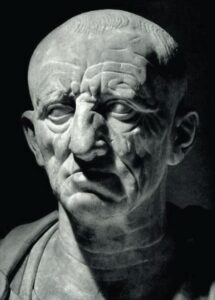
Among those who had no doubts about this was one of the most respected senators of the Republic, an austere and inflexible man: Cato the Elder.
Cato ended many of his speeches with a phrase that became famous:
Ceterum censeo Carthaginem esse delendam.
Besides, I am of the opinion that Carthage must be destroyed.
It was not rhetorical provocation. It was a political diagnosis. Cato believed that some historical rivalries could not be neutralised by treaties or diplomatic compromise. As long as Carthage existed, Rome could never feel completely secure.
During a diplomatic mission to Africa he was struck by the vitality of the Carthaginian city. When he returned to Rome he brought a freshly picked fig into the Senate and showed it to the assembled senators. The fruit was still fresh.
The message was simple.
Carthage was not only prosperous.
It was also very close.
In 146 BC that conviction became action.
After a long siege the city was destroyed and its population scattered by the Roman army commanded by Scipio Aemilianus.
The modern world looks at that episode with discomfort. Contemporary civilisation rests on the opposite idea: states should not be eliminated but integrated into an international system governed by law.
And yet the problem that troubled Cato has never truly disappeared.
Modern history has tried to tame it through treaties, multilateral institutions and diplomacy. But the underlying question — how to deal with regimes perceived as permanent threats — keeps returning.
In contemporary strategic thought this dilemma has been addressed by several scholars of international politics. Among the most influential is Robert Kagan.
For years Kagan has argued that the liberal international order is not a natural condition of world politics. It is a fragile equilibrium sustained by the power and political will of democratic states.
When that will fades, actors emerge who openly challenge the rules of the system.
From this perspective the world did not enter a post-historical era after the Cold War. It remained a competitive system in which certain regimes build their legitimacy on ideological hostility to the existing international order.
Within this framework Iran has become one of the most frequently discussed cases.
The Islamic Republic born from the revolution of 1979 represents a peculiar political system: a combination of formal republican institutions and supreme religious authority.
Over time this structure has produced a growing tension between Iranian society and the ruling power.
Student movements, urban protests and women’s mobilisations have repeatedly revealed how wide the gap has become between the aspirations of Iranian society and the ideology of the regime.
The repression has been severe: mass arrests, summary trials, executions.
Yet each cycle of protests suggests that adherence to revolutionary ideology is gradually weakening.
Among those who observe this phenomenon with particular attention is Natan Sharansky.
Sharansky knows the logic of ideological regimes well. A Soviet dissident, he was arrested by the KGB in 1977 and sentenced to years in the gulag, spending long periods in isolation before being released in 1986 in a prisoner exchange in Berlin.
His analysis begins with a simple intuition: ideological systems collapse when the majority of the population stops believing the official ideology but continues to obey out of fear.
Sharansky calls this condition “doublethink.”
When the distance between propaganda and reality becomes too large, a single moment of weakness can cause the entire system to dissolve rapidly.
Sharansky believes that similar signals are now emerging within Iranian society.
For this reason he has suggested that the fall of the regime could represent a new “Berlin Wall moment” for the Middle East.
Meanwhile the internal structure of power in Iran has also changed.
The revolutionary generation that created the Islamic Republic in 1979 is largely gone. Some figures have disappeared with time; others have gradually been pushed aside.
In recent years several high-ranking military and strategic figures have been eliminated in targeted operations or regional conflicts.
Today the system increasingly appears to be governed by a third line of the regime: men who administer an inherited power but rarely possess the authority or charisma of the original founders.
When regimes reach this stage they often lose their original energy.
The ideology survives in institutions, but no longer in society.
History teaches that no regime appears fragile until the moment it suddenly becomes so.
The Soviet Union seemed eternal only a few years before its dissolution. The Berlin Wall was considered permanent until the night it opened.
If something similar were to happen in Iran, the Middle East would change profoundly.
And yet the question that runs through this entire story remains.
When a regime continues to produce internal repression and international instability, should the world simply contain it — or is it legitimate to hope for its end?
It is a question as old as politics itself.
A question that long ago was formulated with brutal clarity in the Roman Senate.
Cato had no doubts.
Carthago iterum delenda est.
Postscript
I showed this piece to a friend of mine, a distinguished Latin scholar. He did not comment on the content. He stopped at the form.
He said only this: that the movement of the piece reminded him of the speeches of Marcus Tullius Cicero.
Not a quotation. Not an imitation.
A resemblance in structure.
A question at the beginning.
An example from the past.
A return to the present.
And then, at the end, the question again.
As if certain problems never truly change.
And only their names do.