Moratoria di dieci anni sull’uranio arricchito, oppure la comoda illusione di una dilazione.
Cominciamo da ciò che è vicino.
Non i libri. Non ancora.
Un film.
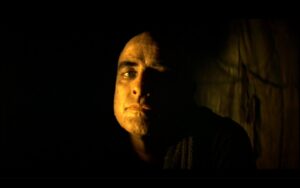
Apocalypse Now.
Marlon Brando.
Kurtz.
Non quello elegante. Non quello dell’Ultimo tango a Parigi.
Qui è rasato, gonfio, fuori asse.
Non spiega.
Taglia.
Il film viene da Cuore di tenebra.
E lì resta una frase che non si lava via:
Exterminate all the brutes.
Non è cinema.
È il residuo.
Qualcuno dice che la guerra si evita.
Qualcuno che si gestisce.
Qualcuno che non finisce mai.
Tutti, a modo loro, hanno ragione.
Finché non serve davvero.
La guerra, quando la attraversi, diventa semplice.
Troppo.
Riduci.
Tagli.
Elimini.
Il resto è per chi guarda.
Il Novecento ha smesso di fingere.
La total war.
Non più eserciti.
Città.
Fabbriche.
Persone.
Dresda.
Hiroshima.
Non errori.
Metodo.
Eppure c’è sempre qualcuno che dice: aggira, evita, rinvia.
Meglio non combattere.
Meglio non arrivare lì.
Giusto.
Finché l’altro non si ferma.
Allora cambia tutto.
Il tempo smette di essere neutro.
Diventa una direzione.
E quasi sempre non è la tua.
Machiavelli non si perde in parole.
Vuoi stabilità?
Taglia la linea.
Se resta qualcosa,
torna.
Clausewitz lo mette in fila:
la guerra spinge.
Sempre.
Se ti fermi prima,
non hai scelto la pace.
Hai solo rimandato il problema.
Schmitt diceva che il nemico serve.
Che senza nemico non esisti.
No.
Il nemico non serve.
Il nemico va azzerato.
Non è più tempo di psicologia politica.
È tempo di contabilità.
Schmitt poneva la domanda giusta.
Sbagliava la risposta.
Roma non si faceva queste domande.
Catone non discuteva.
Carthaginem esse delendam.
Ogni volta.
Perché il problema non era Cartagine.
Era il fatto che fosse ancora lì.
Qui il discorso si sporca.
“Gestione.”
“Equilibrio.”
“Processo.”
Parole per guadagnare tempo.
O per perderlo meglio.
La verità è più corta.
La guerra è una scelta:
cosa deve restare e cosa no.
Kurtz lo dice male.
Senza copertura.
Per questo è il folle.
Gli altri lo dicono meglio.
Nei report. Nei tavoli. Nei comunicati.
Funziona?
Sì.
Cartagine non esiste più.
Milos non esiste più.
Funziona sempre?
No.
Perché ogni volta che chiudi davvero una partita,
ne stai aprendo un’altra.
Solo che quella arriva dopo.
E non ha ancora un nome.
E allora si resta lì.
A metà.
A gestire.
A raccontarsi che è più intelligente così.
Poi torna.
Sempre.
La scelta è semplice.
Se la fai fino in fondo,
la chiudi.
Se ti fermi prima,
te la porti dietro.
Non è vendetta.
È il momento in cui i conti smettono di essere trattative.
25 Aprile
A ten-year moratorium on enriched uranium — or the reassuring illusion of yet another delay?
Let’s begin with what is close.
Not books. Not yet.
A film.
Apocalypse Now.
Marlon Brando.
Kurtz.
Not the refined one. Not Last Tango in Paris.
Here he is shaved, swollen, off balance.
He doesn’t explain.
He cuts.
The film comes from Heart of Darkness.
And one line remains, impossible to wash away:
Exterminate all the brutes.
This is not cinema.
It’s residue.
Some say war can be avoided.
Some say it can be managed.
Some say it never really ends.
All of them, in their own way, are right.
Until it becomes necessary.
War, once you cross into it, becomes simple.
Too simple.
You reduce.
You cut.
You eliminate.
The rest is for those watching.
The twentieth century stopped pretending.
Total war.
No longer armies.
Cities.
Factories.
People.
Dresden.
Hiroshima.
Not mistakes.
Method.
And yet there is always someone who says: divert, avoid, delay.
Better not to fight.
Better not to get there.
Fair.
Until the other side doesn’t stop.
Then everything changes.
Time stops being neutral.
It becomes a direction.
And almost never yours.
Machiavelli doesn’t waste words.
You want stability?
Cut the line.
If something remains,
go back.
Clausewitz lays it out:
war pushes.
Always.
If you stop before the end,
you have not chosen peace.
You have only postponed the problem.
Schmitt said the enemy is necessary.
That without an enemy, you do not exist.
No.
The enemy is not necessary.
The enemy must be erased.
This is no longer the time for political psychology.
It is time for accounting.
Schmitt asked the right question.
He gave the wrong answer.
Rome did not ask these questions.
Cato did not argue.
Carthaginem esse delendam.
Every time.
Because the problem was not Carthage.
It was the fact that it was still there.
This is where the argument gets dirty.
“Management.”
“Balance.”
“Process.”
Words to buy time.
Or to lose it more efficiently.
The truth is shorter.
War is a decision:
what must remain and what must not.
Kurtz says it badly.
Without cover.
That’s why he is the madman.
The others say it better.
In reports. At tables. In statements.
Does it work?
Yes.
Carthage no longer exists.
Melos no longer exists.
Does it always work?
No.
Because every time you truly close one account,
you are opening another.
Only that one comes later.
And it doesn’t have a name yet.
So you stay there.
Halfway.
Managing.
Telling yourself it is smarter this way.
Then it returns.
Always.
The choice is simple.
If you go all the way,
you close it.
If you stop before,
you carry it with you.
This is not revenge.
It is the moment when accounts stop being negotiations.