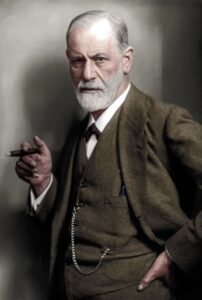
Conversazione con il Prof. Aaron L.C. sull’enigma Trump
Luogo: Milano, una via del centro storico
Data: febbraio 2026
Intervistatori:
Erwin S., semiologo
Luigi P., medico specializzando in psichiatra
Psicoanalista intervistato:
Prof. Aaron L.C., psicoanalista americano, già figura di riferimento di un’importante istituzione psicoanalitica newyorchese
Premessa editoriale
Ci è stata recapitata — non diremo come, né da chi — una trascrizione completa di un colloquio privato avvenuto a Milano, presso l’abitazione italiana del Dottor Luigi P.
Questa conversazione era destinata a rimanere riservata. Ci è sembrato invece doveroso, in quanto osservatori liberi e pensanti, renderla pubblica. Non per esibizionismo, né per compiacimento. Ma per un principio: la verità, anche quando è disturbante, ha diritto di comparire. Abbiamo modificato alcuni dettagli secondari per ragioni di sicurezza e leggibilità. Non abbiamo cambiato nulla della sostanza ed abbiamo avuto l’autorizzazione dei partecipanti
Il documento che segue è, a nostro giudizio, un’autopsia in diretta dello spirito del tempo, condotta con precisione clinica da un maestro della psicoanalisi e accompagnata dalla voce lucida di due giovani studiosi europei.
Pubblicarlo non è un gesto politico. È un gesto igienico.
Conversazione
Erwin S.
Professore, cominciamo con la domanda che tutti le pongono da anni. Trump è pazzo?
Prof. Aaron L.C.
Trump non è pazzo.
È condiviso.
Quando una patologia diventa maggioranza, smette di sembrare una patologia.
Luigi P.
Eppure, Professore, da clinico, non posso non notare la quantità di sintomi evidenti. Compulsività, rabbia, deliri di onnipotenza. Non bastano per una diagnosi?
Prof. Aaron L.C.
È un narcisista classico.
Nulla di originale.
L’originalità è il mezzo: non si specchia, si trasmette.
Lo specchio non basta più.
Erwin S.
Quindi non è un caso clinico, ma un caso culturale?
Prof. Aaron L.C.
Non è un caso clinico.
È la clinica.
Il paziente non è lui: è il contesto.
Luigi P.
Mi colpisce quanto sia terapeuticamente impermeabile. Non sembra nemmeno in grado di immaginare un altrove, una possibilità di cambiamento.
Prof. Aaron L.C.
Il narcisista non cambia.
Cambiare implica perdita.
Trump non cambia: si replica.
È più economico.
Erwin S.
E la democrazia?
Prof. Aaron L.C.
La democrazia non è morta.
Ha solo smesso di curarsi.
E ora pretende di stare meglio.
Luigi P.
Questo narcisismo è una patologia individuale o un sintomo sistemico?
Prof. Aaron L.C.
Entrambe.
È l’individuo che diventa ambiente.
L’egolatria che si insegna a scuola.
Erwin S.
Com’è possibile che un intero paese segua un uomo che tratta la realtà come un format?
Prof. Aaron L.C.
Perché la realtà non funziona più come promessa.
Funziona come intrattenimento.
Trump non spiega: afferma.
È rilassante.
Erwin S.
Che fine ha fatto la verità?
Prof. Aaron L.C.
La verità non offende più.
Intrattiene meno.
È stata licenziata.
Erwin S.
Lei citava Lacan. Cosa direbbe oggi?
Prof. Aaron L.C.
Abbiamo cambiato grammatica.
Ora l’inconscio parla per slogan.
In Comic Sans.
Erwin S.
Clinicamente, cosa rappresenta Trump?
Prof. Aaron L.C.
Un uomo che non ha mai creduto a nulla,
diventato guida di chi non crede più a niente.
Coerente, in fondo.
Erwin S.
È il trionfo dell’Es?
Prof. Aaron L.C.
No.
L’Es è innocente.
Lui è un adulto che parla come un bambino
per non rispondere mai.
Erwin S.
Ride sempre.
Prof. Aaron L.C.
Ride per non ascoltare.
Funziona benissimo.
Erwin S.
È una patologia della solitudine?
Prof. Aaron L.C.
No.
È impossibile da immaginare da solo.
Senza pubblico, evapora.
Erwin S.
Allora ci resta solo il teatro?
Prof. Aaron L.C.
Il teatro resta.
Ma senza catarsi.
Solo repliche.
Erwin S.
Trump è un inedito assoluto o ha precedenti?
Prof. Aaron L.C.
Non ha avuto un padre.
Ha avuto un fratello maggiore.
Si chiamava Silvio Berlusconi.
L’alpha test.
Erwin S.
Un Berlusconi globalizzato?
Prof. Aaron L.C.
Berlusconi vendeva sogni.
Trump vende riflessi.
È un passo avanti.
O indietro.
Erwin S.
È la fine della politica?
Prof. Aaron L.C.
No.
È la politica come disturbo cognitivo.
Persistente.
Erwin S.
La diagnosi finale?
Prof. Aaron L.C.
Paziente cosciente.
Non orientato.
Rifiuta la cura.
Vuole essere fotografato.
Appendice finale
Dialogo sul desiderio – Trump e Putin, il padrone immaginario
Erwin S.
Possiamo parlare di Putin? Cosa rappresenta per Trump?
Prof. Aaron L.C.
Putin non è un alleato.
È un oggetto del desiderio.
Luigi P.
Quindi un modello?
Prof. Aaron L.C.
No.
Vuole essere riconosciuto da lui.
È peggio.
Erwin S.
È erotico?
Prof. Aaron L.C.
Pornografia geopolitica.
Senza reciprocità.
Luigi P.
Trump ride sempre.
Prof. Aaron L.C.
Sì.
Ma quando c’è Putin, chiede.
Erwin S.
E Putin?
Prof. Aaron L.C.
Putin ha già vinto.
Non perché ha conquistato Trump.
Perché non ne ha bisogno.
Postilla di aggiornamento
Nota congiunta del Prof. Aaron L.C. e del Dott. Luigi P.
“Siamo di fronte a una psiche che ha rimosso ogni funzione regolativa. Non è più soltanto disturbo narcisistico: è disinibizione frontale mascherata da strategia.”
(Luigi P.)
“Trump oggi non finge più. Interpreta il ruolo di predatore dell’etica, ridendo. Perché la risata è l’ultimo anestetico dell’Occidente.”
(Aaron L.C.)
Conclusione:
la diagnosi permane e si aggrava. Il paziente è lucido, funzionale, e perfettamente in grado di diffondere il proprio delirio come visione del mondo.
26 febbraio
Conversation with Prof. Aaron L.C. — On the Trump Enigma
Milan, historic centre
February 2026
Interviewers
Erwin S., semiotician
Luigi P., psychiatry resident
Interviewee
Prof. Aaron L.C., American psychoanalyst, formerly a leading figure in a major New York psychoanalytic institution
Editorial Note
A complete transcript of a private conversation held in Milan, at the Italian residence of Dr. Luigi P., reached us — we will not say how, nor through whom.
The discussion was never meant for publication. Yet we felt compelled to release it. Not for spectacle, nor for self-importance, but for a simple reason: truth, even when unsettling, deserves exposure. Some secondary details have been adjusted for clarity and security. Nothing essential has been altered, and publication has been authorized by the participants.
What follows reads less like an interview than an ongoing autopsy of the spirit of the age: a clinical voice, two younger European interlocutors, and the uneasy calm of diagnosis.
Publishing it is not a political gesture. It is a hygienic one.
Conversation
Erwin S.
Professor, let us begin with the question everyone has been asking for years. Is Trump insane?
Prof. Aaron L.C.
Trump is not insane.
He is shared.
When a pathology becomes majority behaviour, it stops looking pathological.
Luigi P.
And yet, clinically speaking, the symptoms seem obvious: compulsivity, rage, grandiosity. Isn’t that enough for a diagnosis?
Prof. Aaron L.C.
He is a classical narcissist. Nothing new there.
The novelty lies elsewhere: he doesn’t mirror himself — he broadcasts himself.
The mirror is no longer sufficient.
Erwin S.
So not a clinical case, but a cultural one?
Prof. Aaron L.C.
Not a clinical case.
The clinic itself.
The patient is not him. The patient is the environment.
Luigi P.
What strikes me most is how impermeable he is to change. He seems unable even to imagine an alternative version of himself.
Prof. Aaron L.C.
Narcissists do not change.
Change implies loss.
Trump does not change — he replicates.
It is cheaper.
Erwin S.
And democracy?
Prof. Aaron L.C.
Democracy isn’t dead.
It has simply stopped taking care of itself.
And now expects to feel better anyway.
Luigi P.
Is this narcissism individual or systemic?
Prof. Aaron L.C.
Both.
The individual becomes the environment.
Egolatry taught as common sense.
Erwin S.
How does an entire country follow a man who treats reality as a format?
Prof. Aaron L.C.
Because reality no longer works as promise.
It works as entertainment.
Trump doesn’t explain — he asserts.
People find that relaxing.
Erwin S.
And truth?
Prof. Aaron L.C.
Truth no longer offends.
It entertains less.
So it was dismissed.
Erwin S.
You mentioned Lacan. What would he say today?
Prof. Aaron L.C.
The grammar changed.
The unconscious now speaks in slogans.
In Comic Sans.
Erwin S.
Clinically, what does Trump represent?
Prof. Aaron L.C.
A man who never believed in anything
becoming leader of those who no longer believe in anything.
A certain coherence there.
Erwin S.
The triumph of the Id?
Prof. Aaron L.C.
No. The Id is innocent.
He is an adult speaking like a child
so he never has to answer.
Erwin S.
He laughs a lot.
Prof. Aaron L.C.
He laughs so he doesn’t have to listen.
It works remarkably well.
Erwin S.
A pathology of loneliness?
Prof. Aaron L.C.
No.
He is unimaginable alone.
Without an audience, he evaporates.
Erwin S.
So all we have left is theatre?
Prof. Aaron L.C.
The theatre remains.
Without catharsis.
Only repetition.
Erwin S.
Is Trump unprecedented, or does he have predecessors?
Prof. Aaron L.C.
He didn’t have a father.
He had an older brother.
His name was Silvio Berlusconi.
The alpha test.
Erwin S.
A globalised Berlusconi?
Prof. Aaron L.C.
Berlusconi sold dreams.
Trump sells reflections.
One step forward.
Or backward.
Erwin S.
Is this the end of politics?
Prof. Aaron L.C.
No.
Politics as cognitive disturbance.
Persistent.
Erwin S.
Final diagnosis?
Prof. Aaron L.C.
Patient conscious.
Disoriented.
Refuses treatment.
Wants to be photographed.
Appendix
Dialogue on Desire — Trump and Putin, the Imaginary Master
Erwin S.
Can we speak about Putin? What does he represent for Trump?
Prof. Aaron L.C.
Not an ally.
An object of desire.
Luigi P.
A model, then?
Prof. Aaron L.C.
No.
He wants recognition from him.
That is worse.
Erwin S.
Something erotic?
Prof. Aaron L.C.
Geopolitical pornography.
Without reciprocity.
Luigi P.
Trump laughs constantly.
Prof. Aaron L.C.
Yes.
But in Putin’s presence, he asks.
Erwin S.
And Putin?
Prof. Aaron L.C.
Putin has already won.
Not because he conquered Trump.
Because he doesn’t need him.
Postscript
Joint note by Prof. Aaron L.C. and Dr. Luigi P.
“We are looking at a psyche that has removed all regulatory function. No longer merely narcissistic disorder — frontal disinhibition disguised as strategy.”
— Luigi P.
“Trump no longer pretends. He plays the predator of ethics, laughing. Laughter has become the West’s last anaesthetic.”
— Aaron L.C.
Conclusion
The diagnosis stands — and deepens.
The patient remains lucid, functional, and fully capable of diffusing his delusion as a worldview.