
Forse sarebbe più divertente parlare della madre.
Perché di solito, quando si discute di questi grandi pensatori postcoloniali — Mamdani, Said, i sacerdoti della colpa occidentale — si finisce sempre per parlare del padre: l’analisi, la geopolitica, il peccato originale dell’Occidente.
Ma la madre, quella sì, sarebbe interessante. Regista cinematografica nata a Dehli, master ad Harvard e premi internazionali a Cannes e Venezia. Acquisisce la green card Usa sposando un Epstein. Non Jeffrey. Poco importa.
Mira Nair ha una figura con le sue trecce indiane, un’eco di Kamasutra, un’idea di sensualità che l’Occidente ha consumato in mille versioni: nei film, nei profumi, nei salotti e negli aerei per Delhi. Lei è l’Oriente che piace — morbido, enigmatico, esteticamente gestibile. La madre che si lascia guardare e offre, con ironia sottile, l’unica forma di pace possibile: l’oblio. Tuttavia Kamasutra di Mira Nair rimane un soft core per un pubblico annoiato.
Il padre invece no. Il padre spiega, giustifica, teorizza.
Mahmood Mamdani è un padre perfetto: solenne, coerente, incapsulato nel linguaggio accademico. Scrive per dire che la colpa del sangue versato nel mondo musulmano è dell’Occidente, della Guerra Fredda, dell’imperialismo, del solito schema. È la voce del risentimento colto, che sa tutto, conosce le mappe e gli archivi, ma continua a ruotare attorno allo stesso centro: l’Occidente come origine di ogni male e misura di ogni ferita. Eppure lui, come Said, ci vive dentro: nelle università americane, nei circuiti editoriali, nei premi. Più cerca di negarlo, più ne diventa creatura.
Io, a questo punto, lo confesso: trovo più vera la madre. Perché almeno lei non pretende di spiegare niente. È tutta forma, profumo, superficie — la parte che sopravvive alle teorie. E se proprio devo scegliere, preferisco la leggerezza dell’inganno alla serietà del risentimento. Dall’Oriente non mi aspetto nulla. E forse è proprio in questo disincanto che comincia una forma nuova di lucidità: ognuno a casa sua, e basta con la nostalgia delle colpe altrui.
E poi c’è lui, il terzo: Naipaul, pure lui indiano ma fatto d’altra pasta. Non è né padre né madre, ma resta in piedi dopo tutti. Scrive come chi misura il mondo con disgusto e tenerezza insieme — l’India, i musulmani dell’Africa orientale, le colonie inglesi ancora rivolte verso Londra come verso un dio distratto. Non denuncia, non consola, non predica: guarda. E quando guarda, le cose muoiono di realtà.
Naipaul non chiede scuse all’Occidente, perché sa che l’Occidente non ne deve. E non difende l’Oriente, perché sa che l’Oriente non ne merita. È il primo ad accettare l’idea che la civiltà non si eredita: si costruisce. E se non la costruisci, nessuno te la regala. Per questo Naipaul irrita: perché non giustifica, e non perdona.
È un ex-coloniale che ha fatto della lucidità la propria vendetta. Eppure è proprio lui a capire davvero Mamdani e Said. Li riconosce, prima ancora di giudicarli: sa che la loro rabbia è autentica, ma anche sterile. Ogni tentativo di spiegare l’ingiustizia, prima o poi, diventa un genere letterario. Ogni rivoluzione, un corso universitario. E ogni idea, un’etichetta da appendere alla porta del proprio dipartimento.
E infine arriva lui, il figlio.
Zohran Mamdani, deputato a New York, erede di tanto padre e della sua grammatica morale. La parabola è perfetta: un figlio che ripete i temi del padre — l’identità, la giustizia, l’eredità coloniale — ma senza il peso della storia né il dubbio del pensatore. Il padre cercava un senso; il figlio un seggio. È il destino delle dinastie: passare dall’intelligenza alla replica, dal pensiero alla formula. Ogni civiltà invecchia così: producendo i suoi figli protetti, quelli che confondono il privilegio con la vocazione, la visibilità con la verità. La critica diventa marketing, la complessità diventa slogan, la ribellione si eredita per cognome ed infine si giura sul Corano.
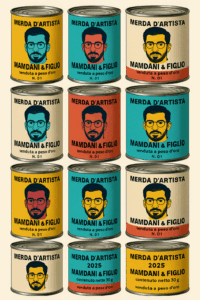
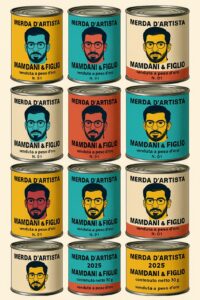
È la nuova merda d’artista: sterilizzata, confezionata, perfettamente vendibile. Non più provocazione, ma certificazione. Non più rischio, ma design. Come nei barattoli di Piero Manzoni, dentro non importa cosa ci sia: conta la firma, l’etichetta, la promessa di autenticità. Così oggi il pensiero si conserva sottovuoto, venduto al prezzo dell’oro, e il vuoto brilla come distillato di verità.
Insomma, Mahmood Mamdani & son mi ricordano un po’ un prodotto inscatolato: venduto all’uso degli sciocchi, ma che funziona benissimo.
Troppo severo? Non credo. La prima anti-crociata di Zohran – dopo aver giurato sul Corano il giorno dell’insediamento – sarà contro un monumento dedicato a Cristoforo Colombo.
Avete in mente la formidabile Merda d’artista di Piero Manzoni, del 1961?
20 febbraio
Mahmood Mamdani – Good Muslim, Bad Muslim. America, the Cold War, and the Roots of Terror
Pantheon Books, New York, 2004
Ci sono libri che nascono per capire il mondo e libri che nascono per processarlo.
Quello di Mahmood Mamdani appartiene alla seconda categoria: un atto d’accusa di trecento pagine contro l’Occidente, scritto da uno che all’Occidente deve tutto — dalla borsa di studio al contratto editoriale.
Mamdani, ugandese d’origine indiana, formatosi a Harvard, oggi professore alla Columbia, spiega che il terrorismo non è figlio dell’islam ma dell’America.
Che i cattivi non sono i musulmani, ma i loro fabbricanti. Che l’Occidente, dopo la Guerra Fredda, ha inventato una nuova grammatica morale: “buoni musulmani” da premiare e “cattivi musulmani” da bombardare.
È un’idea semplice, irresistibile, adatta a ogni talk show e a ogni seminario sulla colpa.
Il mondo come tribunale, l’Occidente come imputato.
E lui, naturalmente, come testimone d’accusa.
La tesi
Secondo Mamdani, la radice del terrore non è religiosa ma politica.
È l’Occidente ad aver seminato la violenza, armando i mujaheddin afghani contro l’URSS, poi chiamandola “islamismo radicale” quando i conti non tornavano più.
Una teoria elegante: storica quanto basta, morale il giusto, perfettamente compatibile con il clima accademico newyorchese.
Il problema è che in questa narrazione non resta spazio per nessuno che non sia vittima o carnefice.
L’islam politico non è una realtà complessa, ma un effetto collaterale della CIA.
Il Sud globale non agisce: reagisce.
Il mondo si divide in colpevoli e risentiti, e la storia si riduce a un inventario di torti.
Il tono
Mamdani scrive come un prete laico: grave, fermo, immune al dubbio.
Ogni pagina suona come una sentenza, ogni nota come una benedizione.
È la teologia morale del postcoloniale, con meno fede e più bibliografia.
Il suo nemico è l’Occidente, ma il suo habitat è perfettamente occidentale: università d’élite, editoria liberal, festival internazionali.
C’è qualcosa di profondamente comodo in tutto questo.
L’idea che la colpa sia sempre altrove è la religione più redditizia del nostro tempo.
E Good Muslim, Bad Muslim ne è il vangelo universitario: brillante, ben scritto, inoffensivo per chiunque conti davvero.
Lettura critica
A distanza di vent’anni, il libro resta interessante non per ciò che dice, ma per ciò che mostra:
come una parte del pensiero del Sud del mondo sia diventata la caricatura morale del Nord che accusa.
È l’internazionalismo del risentimento, travestito da analisi geopolitica.
Ogni ingiustizia diventa un capitale simbolico, ogni trauma una cattedra.
Mamdani è sincero, ma perfettamente allineato: un radicale senza rischio, un dissidente stipendiato.
Predica la decolonizzazione in inglese impeccabile, sotto il riscaldamento centralizzato di New York.
E se oggi Good Muslim, Bad Muslim continua a vendere, è perché offre la cosa più desiderata da entrambi i mondi:
all’Occidente, una buona dose di auto-odio etico; al Sud globale, una giustificazione elegante per non cambiare mai.
In sintesi
Un classico della morale contemporanea: il libro che spiega tutto, purché tu non chieda soluzioni.
La geopolitica come psicoterapia, la colpa come status simbol.
Un pamphlet lucido, a tratti geniale, ma che si guarda troppo allo specchio per vedere davvero il mondo.
Nota finale
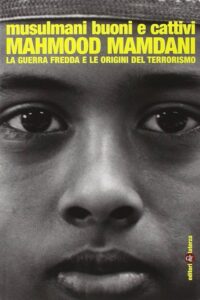
Lo abbiamo comprato usato su eBay a 10,50 €, spedizione inclusa, nell’edizione italiana con in copertina l’immagine di un povero nero — a ricordarci chi sono i cattivi. Paradossale, però, se si pensa che furono proprio i neri ugandesi a scacciare dall’Africa la famiglia indiana di Mamdani. La storia, come sempre, è più sfuggente delle teorie che cercano di spiegarla.
Mahmood Mamdani: grande mestiere, zero rischio. Sferra anatemi da cattedra, con la sicurezza di chi ha già il posto fisso nella morale. Predica la decolonizzazione in inglese perfetto, al caldo di New York. È la forma più evoluta del privilegio: il vittimismo con vista su Columbia University.
Perhaps it would be more entertaining to talk about the mother.
Because when people discuss these great postcolonial thinkers — Mamdani, Said, the priests of Western guilt — they always end up talking about the father: analysis, geopolitics, the original sin of the West.
But the mother, now that would be interesting. A film director born in Delhi, Harvard-trained, decorated at Cannes and Venice. She obtained her U.S. green card by marrying an Epstein. Not Jeffrey. Hardly matters.
Mira Nair carries herself with those Indian braids, an echo of Kamasutra, an idea of sensuality the West has consumed in endless forms: in films, perfumes, drawing rooms and long flights to Delhi. She is the kind of East the West likes — soft, enigmatic, aesthetically manageable. The mother who allows herself to be watched and offers, with subtle irony, the only possible form of peace: oblivion. And yet Kamasutra, her film, remains little more than softcore for a bored audience.
The father is different. The father explains, justifies, theorizes.
Mahmood Mamdani is the perfect father: solemn, coherent, wrapped in academic language. He writes to explain that the blood spilled across the Muslim world is the fault of the West — the Cold War, imperialism, the usual script. He speaks with the cultivated resentment of someone who knows everything, who reads maps and archives, yet keeps revolving around the same center: the West as the origin of every evil and the measure of every wound. And yet, like Said, he lives inside it: American universities, publishing circuits, literary prizes. The more he tries to deny it, the more he becomes its creature.
At this point, I admit it: I find the mother more truthful. At least she doesn’t pretend to explain anything. She is all form, perfume, surface — the part that survives theories. And if I must choose, I prefer the lightness of illusion to the solemnity of resentment. I expect nothing from the East. Perhaps it is in this disillusionment that a new kind of clarity begins: everyone at home, and enough with the nostalgia of inherited guilt.
And then there is the third figure: Naipaul — Indian too, but made of different matter. Neither father nor mother, yet the one still standing at the end. He writes like someone measuring the world with disgust and tenderness at once — India, the Muslims of East Africa, former British colonies still looking to London like a distracted god. He does not denounce, console, or preach: he observes. And when he observes, things die of reality.
Naipaul does not ask the West for apologies, because he knows the West owes none. Nor does he defend the East, because he knows the East deserves none. He is the first to accept that civilization is not inherited — it is built. And if you do not build it, no one will hand it to you. That is why Naipaul irritates: he neither justifies nor forgives.
An ex-colonial who turned lucidity into revenge. And yet he understands Mamdani and Said better than anyone. He recognizes them before judging them: their anger is real, but sterile. Every attempt to explain injustice eventually becomes a literary genre. Every revolution, a university course. Every idea, a label on an academic office door.
And finally, the son arrives.
Zohran Mamdani, New York politician, heir to a great father and to his moral grammar. The parabola is perfect: a son repeating the father’s themes — identity, justice, colonial inheritance — but without the weight of history or the doubt of the thinker. The father sought meaning; the son seeks a seat. It is the destiny of dynasties: intelligence turning into repetition, thought into formula. Civilizations age this way, producing protected children who mistake privilege for vocation, visibility for truth. Critique becomes marketing, complexity turns into slogans, rebellion is inherited by surname — and eventually sworn upon the Qur’an.
It is the new Artist’s Shit: sterilized, packaged, perfectly marketable. No longer provocation, but certification. No longer risk, but design. Like Piero Manzoni’s cans, what matters is not what is inside, but the signature, the label, the promise of authenticity. Thought itself is vacuum-sealed, sold at the price of gold, emptiness shining as distilled truth.
In short, Mahmood Mamdani & Son remind me of a canned product: made for the consumption of fools — and selling remarkably well.
Too harsh? I don’t think so. The first anti-crusade of Zohran — after swearing on the Qur’an at his inauguration — will likely be against a monument to Christopher Columbus.
Remember Piero Manzoni’s famous Artist’s Shit, from 1961?
Mahmood Mamdani — Good Muslim, Bad Muslim: America, the Cold War, and the Roots of Terror
Pantheon Books, New York, 2004
Some books are written to understand the world; others to put it on trial.
Mahmood Mamdani’s belongs to the latter category: a three-hundred-page indictment of the West, written by someone who owes the West everything — from scholarships to publishing contracts.
Mamdani, Ugandan of Indian origin, Harvard-trained and now a professor at Columbia, argues that terrorism is not the child of Islam but of America. That the real villains are not Muslims, but those who manufactured them. That after the Cold War, the West invented a new moral grammar: “good Muslims” to be rewarded and “bad Muslims” to be bombed.
It is a simple, irresistible idea — perfect for talk shows and academic seminars on guilt. The world as tribunal, the West as defendant. And him, naturally, as witness for the prosecution.
The Thesis
According to Mamdani, the roots of terror are not religious but political. The West sowed violence by arming the Afghan mujahideen against the USSR, only to rename the result “radical Islam” when the الحساب no longer balanced. An elegant theory: historical enough, moral enough, perfectly aligned with the New York academic climate.
The problem is that this narrative leaves room for no one who is not either victim or perpetrator. Political Islam is reduced to a side effect of the CIA. The Global South does not act; it reacts. The world divides neatly into guilty and resentful, history reduced to a catalogue of grievances.
The Tone
Mamdani writes like a secular priest: solemn, certain, immune to doubt. Every page reads like a sentence, every footnote like a blessing. It is the moral theology of postcolonial thought — less faith, more bibliography. His enemy is the West, yet his habitat is thoroughly Western: elite universities, liberal publishing houses, international festivals.
There is something deeply comfortable about all this. The idea that guilt always lies elsewhere has become one of our era’s most profitable religions. And Good Muslim, Bad Muslim is its academic gospel: brilliant, well written, and harmless to anyone who truly holds power.
Critical Reading
Twenty years later, the book remains interesting not so much for what it says, but for what it reveals: how a segment of Global South thinking turned into the moral caricature of the North it accuses. International resentment disguised as geopolitical analysis. Every injustice becomes symbolic capital, every trauma a chair at the university.
Mamdani is sincere, but perfectly aligned: a radical without risk, a dissident on salary. He preaches decolonization in flawless English, comfortably warm in New York. And if Good Muslim, Bad Muslim still sells, it is because it offers something deeply desired by both worlds: to the West, a generous dose of ethical self-hatred; to the South, an elegant excuse never to change.
In Summary
A classic of contemporary moral thought: a book that explains everything — provided you do not ask for solutions. Geopolitics as psychotherapy, guilt as status symbol. A lucid, at times brilliant pamphlet that stares so long into the mirror it forgets to look at the world.
Final Note
We bought our copy second-hand on eBay for €10.50, shipping included — the Italian edition featuring, on the cover, the image of a poor Black man, just to remind us who the villains are supposed to be. Paradoxically, it was Black Ugandans who expelled Mamdani’s Indian family from Africa. History, as always, slips away from the theories meant to explain it.
Mahmood Mamdani: great craft, zero risk. He delivers academic anathemas with the confidence of someone whose moral tenure is secure. He preaches decolonization in perfect English, comfortably warm in New York. The most evolved form of privilege: victimhood with a view over Columbia University.