
Non è il Rubicone.
Il Rubicone almeno era un fiume reale.
Qui il confine è più sfumato: una conferenza stampa, due portaerei, qualche frase pronunciata con la leggerezza di chi cambia canale alla televisione. E poi, all’improvviso, le bombe.
Donald Trump — l’uomo che prometteva di chiudere le guerre infinite — apre un nuovo capitolo con una semplicità quasi amministrativa: major combat operations. La formula suona come un aggiornamento software. Nessuno dice guerra. La guerra è una parola vecchia, ingombrante. Oggi si preferiscono termini leggeri, senza responsabilità morale. Eppure i missili cadono lo stesso.
Trump non è Cesare perché non cerca Roma. Trump è Cesare perché decide di non chiedere il permesso.
Il Congresso può attendere. L’ONU pure. Il diritto internazionale — tanto caro ai professori universitari — resta sullo sfondo, come un manuale lasciato aperto su una scrivania vuota. L’emergenza è la nuova costituzione non scritta. L’emergenza giustifica i dazi. L’emergenza giustifica le eccezioni. L’emergenza giustifica le bombe.
Lo devo fare, quindi lo faccio.
Un verbo solitario, coniugato alla prima persona.
Il paradosso è quasi elegante. Il presidente che sognava il Nobel per la pace ora bombarda in nome della pace futura. Non c’è nemmeno ipocrisia: solo pragmatismo spinto all’estremo. La questione non è il regime iraniano. Lo conosciamo da quarant’anni.
La questione è capire chi diventa Trump quando smette di essere personaggio e diventa funzione. Non più isolazionista. Non più populista anti-sistema. Solo decisione. L’alea è stata lanciata. Non c’è più il fiume, non c’è più il Senato, non c’è più il dubbio. Solo la decisione che precede la domanda.
Forse il vero cesarismo moderno è questo: non conquistare il mondo, ma convincerlo che non esista alternativa. E mentre le bombe cadono, qualcuno ancora discute di regole. Come se la storia chiedesse ancora il permesso.
28 febbraio
It is not the Rubicon.
The Rubicon, at least, was a real river.
Here the boundary is more blurred: a press conference, two aircraft carriers, a few sentences delivered with the casual ease of someone changing channels on television. And then, suddenly, the bombs.
Donald Trump — the man who promised to end endless wars — opens a new chapter with almost administrative simplicity: major combat operations. The phrase sounds like a software update. No one says war. War is an old, cumbersome word. Today lighter terms are preferred, stripped of moral weight.
And yet the missiles fall all the same.
Trump is not Caesar because he seeks Rome. Trump is Caesar because he chooses not to ask permission.
Congress can wait. The UN as well. International law — so dear to university professors — remains in the background, like a manual left open on an empty desk. Emergency is the new unwritten constitution. Emergency justifies tariffs. Emergency justifies exceptions. Emergency justifies bombs.
I have to do it, so I do it.
A solitary verb, conjugated in the first person.
The paradox is almost elegant. The president who dreamed of a Nobel Peace Prize now bombs in the name of future peace. There is not even hypocrisy — only pragmatism pushed to its extreme. The question is not the Iranian regime. We have known it for forty years.
The real question is what Trump becomes when he stops being a character and turns into a function. No longer an isolationist. No longer an anti-system populist. Only decision.
The die has been cast. There is no river anymore, no Senate, no doubt. Only the decision that comes before the question.
Perhaps this is modern Caesarism: not to conquer the world, but to convince it there is no alternative. And while the bombs fall, someone is still debating rules — as if history were still asking for permission.
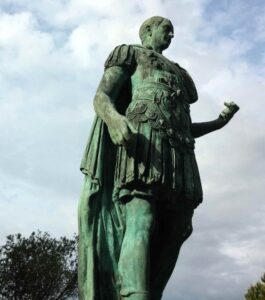
Giulio Cesare