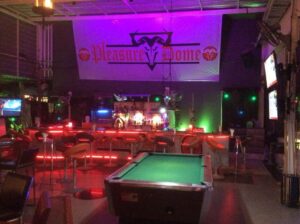
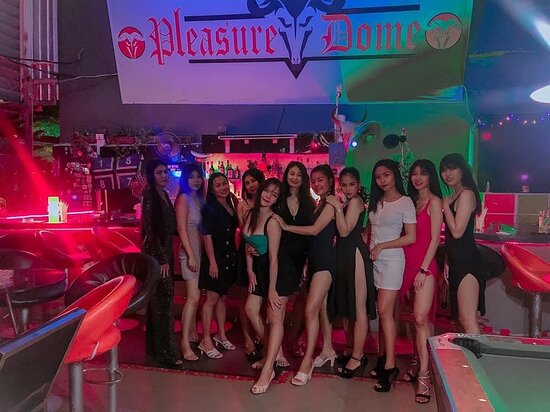
C’è un bar a Rawai nell’isola di Phuket, nascosto tra una lavanderia self-service e un’agenzia immobiliare, dove ogni sera due uomini giocano a snooker sotto una lampada azzurra. Il bar si chiama Pleasure Dome e chi lo gestisce è la signora Pla – che il thai vuol dire pesce – la mama san del locale.
Controlla tutto. Sa tutto. E’ simpatica il necessario perchè conosce il mestiere. E’ lei che mi dice che chi gioca a snooker sono un russo e un ucraino. Uno si chiama Sergei, viene da Rostov ed è biondo. L’altro è Andriy, è cresciuto a Dnipro ed è pure biondo. Sembrano figli della stessa madre, ma forse a casa loro si sarebbero sparati. Qui si sfidano per una birretta Chang e ridono.
Parlano in russo, si capiscono bene. Nessuna tensione, solo un’intesa senza spiegazioni. Poi vanno a bere in un karaoke sgangherato di Chalong, con qualche ragazza thai a buon mercato e i ventilatori che tossiscono polvere. La guerra è lontana. Come un sogno sbiadito, o un debito che non si sa se si dovrà pagare.
Non sono i soli. Sono decine di migliaia, ormai, i russi e gli ucraini sparsi per la Thailandia. A Phuket, a Pattaya, a Koh Samui, persino a Chiang Mai.
Gente che ha deciso di non combattere. O di non aspettare.
Per i russi, le strade sono poche:
– La Turchia, certo, ma è stanca e affollata.
– Il Golfo Persico, ma è roba da milionari.
– La Thailandia, invece, è ancora un buon affare: visto turistico da rinnovare, qualche aggancio, e una comunità di connazionali già presente da anni. Ci sono parrucchieri russi a Kamala. Estetiste a Kata. Scuole di yoga “slav style” a Koh Phangan. Agenti immobiliari a Bangkok. Tutti espatriati con una ferita aperta, ma senza più voglia di parlarne. Non è diserzione. È esilio. Silenzioso, tropicale, operativo.
Avere un passaporto russo oggi non è facile. Niente carte di credito che funzionano. Visti complicati. Sospetti. Frontiere che si chiudono lentamente. E allora si resta qui. In Thailandia. Dove non chiedono nulla. Dove il clima è buono, il cibo costa poco e nessuno fa domande sulla tua posizione rispetto alla guerra.
Gli ucraini, certo, avrebbero più strade: Europa, Canada, aiuti, progetti. Ma anche loro restano. Perché qui si vive con meno. Perché qui c’è pace. Una pace impastata di zanzare, noodle e alcol, ma pur sempre una pace.
E allora succede questo: che le persone che si sparrerebbero nelle trincee del Donetsk, si ritrovano a bere ed a giocare a snooker tra le puttane di Rawai. Non si odiano. Perchè mai? Non discutono di politica. Vogliono solo vivere. In una casa in affitto ed un condizionatore che funziona. Con un’amica thai che cucina, ride, magari ti ama un po’ finchè hai abbastanza soldi da pagare per il suo tempo. La guerra c’è. Ma è in pausa, almeno qui. E loro non combattono. La competizione è solo per una birra. E, ogni sera, uno paga. Li guardo giocare. Li osservo da due giorni. E una sera, con pudore, mi avvicino. Offro una birra — mi sorridono, Sergei mi fa cenno di sedermi. Ci mettiamo a parlare. Non molto, solo accenni. Dico che sono italiano, che conosco un po’ l’Est, che la guerra mi sembra lontana da qui. Loro annuiscono, con uno di quei sorrisi un po’ stanchi, come se volessero dire: “sì, anche per noi”.
Dopo un po’, quasi senza accorgermene, chiedo qualcosa che non si dovrebbe chiedere. Non è una domanda diretta. È più un’increspatura nella voce.
Una frase come:
“È strano pensare che altrove… tutto questo sarebbe impensabile. Che lì ci si uccide. E qui… si beve, si ride. Si vive.”
Silenzio. Ma non imbarazzo. Poi Andriy prende la parola. Mi parla con una tristezza che non è rancore. Con la malinconia di chi ha perso qualcosa che forse non si potrà più ritrovare.
“Non è una guerra tra noi,” dice piano.
“È come una grande tempesta. Una cosa che succede. Come un’alluvione. Come un terremoto.”
Mi colpisce. Non c’è odio, né volontà di spiegare. Solo accettazione, come davanti a un disastro naturale. Come se la colpa fosse ovunque e in nessuno.
Poi Sergei, il russo, guarda il bicchiere e aggiunge:
“La mia famiglia è mista. Il nonno era ucraino. Non c’è bisogno di dirlo. Tanto lo sai già.”
“In fondo… siamo tutti madre Russia. Anche quelli che non lo vogliono più. E allora… cosa vuoi che sia? Una guerra civile? Non lo è nemmeno. È… è una guerra dei padroni. Degli uomini che comandano le bandiere.”
Resta in silenzio un attimo. Poi scuote la testa, come per allontanare un pensiero troppo denso. Ma a me, in quel momento, tutto diventa chiaro.
La parola che mi torna in mente è: “terre miste”. Non è un’espressione mia. L’ho letta da qualche parte, forse in Claudio Magris, triestino come il mio amico Nicola Pecchiari, gente di confine e per questo più saggi o in un vecchio testo sulla Galizia. Zone in cui nessuno è completamente uno, e tutti sono un po’ dell’altro. Dove le guerre arrivano sempre da fuori, come ordini secchi gridati da lontano. È lì che nascono i più grandi dolori. Perché sono terre senza bordi netti, lingue che si intrecciano, volti che assomigliano a entrambi i fronti. Sergei mi dice che il nonno era ucraino, Andriy racconta di un bisnonno deportato in Siberia, e nessuno dei due riesce più a dire con chiarezza cosa significhi “noi”. E io penso a Vasilij Grossman, che nella sua Vita e destino cercava la verità in mezzo al fango delle case distrutte, tra i nomi di chi era nato in un Paese e morto in un altro — senza mai muoversi da casa.
Queste sono le vere terre miste: dove le frontiere cambiano, ma la terra resta la stessa, e gli uomini si somigliano più di quanto vogliano ammettere.
E allora le guerre non sono battaglie tra opposti, ma fratture nell’identità, negli affetti, nelle genealogie. Nessuno vince. Nessuno perde. Si perde solo qualcosa che non ha un nome.
Bevo con loro. Li ascolto.
Una partita finisce, ne comincia un’altra. Una delle ragazze ride a una battuta che non ho capito. Il ventilatore cigola. Il ghiaccio si scioglie nei bicchieri.
Fuori passa uno scooter con tre persone a bordo. E penso che non so se quello che ho visto è giusto, sbagliato, vigliacco o coraggioso. So solo che è umano.
Che qui, a Rawai, due uomini che si sarebbero sparati a distanza di cento metri, si offrono da bere. Che parlano con rispetto, con lentezza, come se ogni frase fosse un vetro sottile. Che non vogliono più tornare indietro, non perché abbiano scelto un lato, ma perché non credono più nella logica dei lati.
E allora penso che forse questo è il vero esilio: non essere più da nessuna parte, eppure trovare una quiete nel vivere altrove, lontani da chi decide, da chi comanda, da chi divide. E io, in quel bar con tavoli da snooker e puttane annoiate, non provo pena, né ammirazione. Solo un dolore piccolo, rotondo. Come una nostalgia per qualcosa che non ho vissuto, ma che capisco benissimo. Forse perché anche io, nel mio piccolo, sto cercando un altrove dove restare in silenzio. Forse la forma più discreta e profonda della pace.
7 gennaio
There’s a bar in Rawai, tucked between a self-service laundromat and a real estate agency, where every evening two men play snooker beneath a soft blue light. The bar is called Pleasure Dome, and it’s run by Mrs. Pla – which, in Thai, means fish – the mama-san of the place.
She controls everything. She knows everything. She’s as friendly as necessary because she understands the craft. It’s she who tells me that the men playing snooker are a Russian and a Ukrainian. One is named Sergei, from Rostov, and he’s blonde. The other is Andriy, from Dnipro, and he’s also blonde. They look like brothers, but perhaps, back home, they would have shot each other. Here, they challenge each other over a Chang beer and laugh.
They speak in Russian, they understand each other well. There’s no tension, just an unspoken understanding. Then, they head to a shabby karaoke joint in Chalong, with a few Thai girls on the cheap and fans coughing up dust. The war seems far away. Like a faded dream, or a debt that may or may not have to be paid.
They’re not the only ones. By now, there are tens of thousands of Russians and Ukrainians scattered across Thailand. In Phuket, Pattaya, Koh Samui, even Chiang Mai.
People who’ve decided not to fight. Or not to wait.
For Russians, the roads are few:
– Turkey, of course, but it’s tired and crowded.
– The Persian Gulf, but that’s for millionaires.
– Thailand, though, is still a good deal: a visa to renew, a few connections, and a community of fellow countrymen already established. There are Russian hairdressers in Kamala. Estheticians in Kata. “Slav-style” yoga schools in Koh Phangan. Real estate agents in Bangkok. All expatriates with an open wound, but no longer willing to talk about it. It’s not desertion. It’s exile. Silent, tropical, operational.
Having a Russian passport today isn’t easy. No working credit cards. Complicated visas. Suspicion. Borders slowly closing. So, they stay here. In Thailand. Where they ask nothing. Where the weather’s good, food is cheap, and no one asks about your stance on the war.
The Ukrainians, of course, have more options: Europe, Canada, aid, projects. But they stay, too. Because life is cheaper here. Because here there is peace. A peace made of mosquitoes, noodles, and alcohol, but still, peace.
And so this happens: the people who would shoot each other in the trenches of Donetsk find themselves drinking and playing snooker among the prostitutes of Rawai. They don’t hate each other. Why would they? They don’t talk politics. They just want to live. In a rented house with a functioning air conditioner. With a Thai friend who cooks, laughs, maybe loves you a little as long as you have enough money to pay for her time. The war exists. But it’s on pause, at least here. And they’re not fighting. The competition is only for a beer. And every evening, one of them pays. I watch them play. I observe them for two days. And one evening, with a bit of hesitation, I approach them. I offer a beer — they smile at me, Sergei gestures for me to sit. We start talking. Not much, just a few hints. I say I’m Italian, that I know a little about the East, that the war feels distant from here. They nod, with one of those tired smiles, as if they want to say: “Yes, it’s distant for us, too.”
After a while, almost without realizing it, I ask something that shouldn’t be asked. It’s not a direct question. It’s more like a ripple in my voice.
A phrase like:
“It’s strange to think that elsewhere… all this would be unthinkable. That there, people kill each other. And here… we drink, we laugh. We live.”
Silence. But no embarrassment. Then Andriy speaks. He talks to me with a sadness that isn’t resentment. With the melancholy of someone who has lost something that perhaps cannot be found again.
“It’s not a war between us,” he says quietly.
“It’s like a great storm. Something that happens. Like a flood. Like an earthquake.”
It strikes me. There’s no hatred, no will to explain. Just acceptance, as if faced with a natural disaster. As if the blame is everywhere and in no one.
Then Sergei, the Russian, looks at his glass and adds:
“My family is mixed. My grandfather was Ukrainian. No need to say it. You already know.”
“After all… we’re all Mother Russia. Even those who no longer want it. So… what is it? A civil war? It’s not even that. It’s… it’s a war of the masters. Of the men who command the flags.”
He falls silent for a moment. Then he shakes his head, as if to dispel a thought too heavy. But for me, at that moment, everything becomes clear.
The word that comes to mind is: “mixed lands.” It’s not my expression. I read it somewhere, maybe in Claudio Magris, like my friend Nicola Pecchiari, a man of the border and therefore wiser, or in an old text about Galicia. Places where no one is completely one, and everyone is a little of the other. Where wars always come from the outside, like orders shouted from afar. It’s there that the greatest pains are born. Because they’re lands without clear borders, languages that intertwine, faces that look like both fronts. Sergei tells me his grandfather was Ukrainian, Andriy speaks of a great-grandfather deported to Siberia, and neither of them can clearly say what “we” means anymore. And I think of Vasilij Grossman, who, in his Life and Fate, searched for the truth amid the mud of destroyed houses, between the names of those born in one country and died in another — never moving from home.
These are the real mixed lands: where borders change, but the land stays the same, and men resemble each other more than they want to admit.
And so, wars aren’t battles between opposites, but fractures in identity, in affection, in genealogies.
No one wins. No one loses. You only lose something that has no name.
I drink with them. I listen.
A match ends, another begins. One of the girls laughs at a joke I didn’t understand. The fan creaks. The ice melts in the glasses.
Outside, a scooter passes with three people on it. And I think I don’t know whether what I’ve seen is right, wrong, cowardly, or brave. I just know that it’s human.
Here, in Rawai, two men who would have shot each other a hundred meters apart offer each other a drink.
They speak with respect, slowly, as if every sentence were a thin glass. They don’t want to go back, not because they’ve chosen a side, but because they no longer believe in the logic of sides.
And so I think that perhaps this is the true exile: not being anywhere anymore, and yet finding peace in living elsewhere, away from those who decide, from those who command, from those who divide. And I, in that bar with snooker tables and bored prostitutes, don’t feel pity, nor admiration. Just a small, round pain. Like a nostalgia for something I haven’t lived, but I understand perfectly.
Maybe because, in my small way, I, too, am looking for an elsewhere where I can stay in silence. Maybe that’s the most discreet and profound form of peace.