
L’Admiral di Milano è uno di quei luoghi che sembrano progettati da un arredatore sotto lieve effetto di ketamina patriottica occidentale.
Zona CityLife, vetro, traffico, nuovi ricchi, architetture che cercano disperatamente di sembrare il futuro. Poi entri e trovi pareti piene di memorabilia di James Bond, gadget da Guerra Fredda, fotografie, locandine, feticci dell’Occidente quando l’Occidente era ancora convinto di dirigere il mondo come un agente segreto britannico con smoking bianco e licenza di uccidere.
Admiral.
Curioso nome. È lo stesso di un albergo in Sukhumvit 23 a Bangkok dove mi capita spesso di dormire.
Per un attimo penso davvero di avere sbagliato continente.
La fauna presente non aiuta. Creativi tatuati, designer, figure milanesi impossibili da classificare, persone che sembrano vivere permanentemente dentro un aperitivo di lancio. Alle pareti, quadrerie curiose. In sottofondo quel brusio da evento urbano contemporaneo dove nessuno capisce bene perché si trovi lì, ma tutti fingono di sì.
Mi guardo intorno con prudenza.
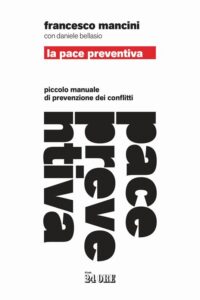
Poi, in fondo alla sala, individuo Cristiano Mancini. Ex campione di sci nautico, amico di lunga data, uno di quegli uomini che conservano qualcosa di sportivo perfino nel modo di stare immobili. È lui che mi ha invitato alla presentazione del libro del figlio Francesco Mancini, La pace preventiva, pubblicato con Il Sole 24 Ore.
Mi faccio largo tra i creativi tatuati e le creature metropolitane che Milano produce spontaneamente attorno a vernissage, podcast e cocktail tiepidi.
«No, tranquillo», mi dice Cristiano sorridendo, intuendo il mio smarrimento. «C’è un altro evento che si sovrappone al nostro. Questi tra poco scendono sotto.»
«Sotto dove?»
«In cantina.»
La parola “cantina”, pronunciata dentro quell’albergo pieno di James Bond e tatuaggi, assume improvvisamente una sfumatura quasi rituale. Poco dopo infatti il primo popolo evapora davvero. Liquefatto. Assorbito verso il piano inferiore come da una forza gravitazionale milanese.
La sala si svuota.
Ed emerge finalmente il vero motivo della serata.
Conosco Francesco. Stretta di mano, sorriso immediato, nessuna rigidità accademica. Mi dice di leggere con piacere Altriorienti. Gli rispondo che seguo il suo lavoro e i podcast del Sole 24 Ore. È uno scambio rapido ma sincero.
Poi Francesco si siede e comincia a parlare.
La cosa che colpisce subito è la chiarezza.
Non la chiarezza artificiale dei divulgatori televisivi che semplificano tutto fino a trasformarlo in slogan, ma quella di chi ha insegnato davvero, lavorato davvero dentro le organizzazioni internazionali e ha imparato che il mondo è già abbastanza complicato senza bisogno di renderlo ancora più oscuro.
Parla dell’Asia.
Ricorda una verità che in Europa continuiamo spesso a fingere di non vedere: nel giro di pochi decenni una parte enorme dell’Asia è passata dalla povertà alla ricchezza. Non totale, certo. Non uniforme. Ma reale. La povertà assoluta è crollata. E soprattutto quei paesi non intendono più essere spettatori del mondo costruito da altri.
Pretendono di essere interlocutori.
E, bisogna ammetterlo, in modo del tutto legittimo.
Ma la parte più interessante arriva quando Francesco parla dei suoi studenti a Singapore. Non un’aula occidentale tradizionale, ma una piccola miniatura del pianeta: americani, taiwanesi, thailandesi, malesi, birmani, sauditi, australiani, singaporeani.
Persone cresciute dentro storie, religioni, sensibilità e memorie completamente differenti.
Eppure costrette, in qualche modo, a parlarsi.
Non necessariamente ad amarsi. Nemmeno a pensarla allo stesso modo. Ma almeno a capire le ragioni reciproche.
Empatia.
Forse è questa la parola centrale della serata.
Non come sentimentalismo da social network, ma come strumento geopolitico minimo di sopravvivenza reciproca.
Perché Francesco non parla realmente di un “nuovo ordine mondiale”. Credo che nemmeno lui pensi più che un ordine esista davvero. Piuttosto, suggerisce l’idea di una nuova grammatica mondiale. Un insieme minimo di regole linguistiche, culturali e psicologiche che permettano a civiltà differenti di non distruggersi completamente.
Ed è qui che il libro diventa interessante.
Non utopia ingenua. Non pacifismo da festival universitario. Ma tentativo pragmatico di evitare che il pianeta impazzisca definitivamente.
A un certo punto, durante il dibattito, un anziano signore prende la parola. Tono severo, leggermente apocalittico. Europa in disfacimento, organizzazioni internazionali inutili, caos globale.
Francesco ascolta con pazienza.
Poi racconta una scena.
Dice che anni fa, dopo ore di viaggio in un remoto angolo africano — forse Angola — vide apparire nella giungla un carro armato bianco. Bianco perché i mezzi ONU vengono dipinti così.
Quel carro armato proteggeva una piccola comunità sperduta.
Nulla di epico. Nessuna retorica hollywoodiana. Solo un carro armato bianco fermo nel nulla africano come un grande elefante metallico.
Eppure, per quella gente, significava qualcosa.
Protezione. Presenza. Un limite minimo imposto alla violenza.
L’immagine resta nella testa.
Il carro armato bianco.
Molto più efficace di cento statistiche.
Anche sull’Europa Francesco evita sia il catastrofismo sia la propaganda.
Dice una cosa semplice: forse l’Europa produce troppe norme, forse è lenta, rumorosa, farraginosa. Però funziona.
Ed è difficile negarlo.
Non solo perché da settant’anni l’Europa occidentale non conosce guerre interne su larga scala, ma perché l’Unione Europea resta uno dei più grandi esperimenti politici mai tentati: popoli differenti che cercano continuamente, faticosamente, di costruire un linguaggio comune.
Imperfetto.
Ma reale.
A quel punto alzo la mano anch’io.
Ricordo Norman Angell e La grande illusione del 1909. L’idea secondo cui la guerra moderna non convenisse più economicamente a nessuno. Angell vendeva milioni di copie, predicava razionalità, interdipendenza, pace.
Poi arrivarono Verdun e la Somme.
La storia, spesso, prende a schiaffi il buon senso.
Francesco capisce immediatamente il punto della domanda. Sorride. Dice che oggi il mondo è molto più interconnesso di allora, infinitamente più globalizzato, e che dunque le convenienze della pace sono probabilmente ancora maggiori.
Poi però aggiunge una frase importante.
Dice che esistono Putin. Esistono Trump. Esistono leader che la guerra la valutano comunque, magari ci pensano quattro volte, ma poi la fanno.
La serata finisce così.
I creativi non sono ancora riemersi dalle catacombe dell’Admiral. Forse stanno ancora bevendo cocktail fluorescenti sotto i cimeli di James Bond.
Io saluto Cristiano rapidamente. Devo correre altrove.
Due balzi e sono fuori.
Milano continua a muoversi nel traffico del dopocena.
Post scriptum
Torno a casa.
Apro il Corriere della Sera e trovo un’intervista a Odd Arne Westad che insegna a Yale, che spiega come il mondo assomigli sempre di più a quello prima della Prima guerra mondiale. La Cina come la Germania imperiale. Gli Stati Uniti come un impero britannico stanco. Potenze interconnesse che parlano continuamente e si comprendono sempre meno.
Ed eccolo lì, il vecchio fantasma di Norman Angell. Nel 1909 scriveva che la guerra moderna non conveniva più a nessuno. Economia, commercio, interdipendenza. Tutto troppo integrato per distruggersi davvero. Cinque anni dopo arrivò Verdun. La storia ha un carattere sgradevole: continua a dimostrare che gli esseri umani fanno regolarmente cose che non convengono.
Ed è esattamente questo il punto dove il discorso di Francesco e quello di Odd Arne Westad quasi si toccano.
Entrambi parlano di comprensione.
Solo che uno la vede come possibilità. L’altro come fallimento imminente.
Francesco racconta studenti americani, sauditi, thailandesi, taiwanesi, malesi che cercano di costruire una grammatica comune.
Westad vede invece potenze che si osservano come nel 1913: molto informate, molto connesse, molto tecnologiche… e profondamente incapaci di capire davvero le paure reciproche.
Forse la differenza sta tutta lì.
Nelle aule universitarie di Singapore il dialogo sembra ancora possibile.
Nei palazzi del potere globale molto meno.
Per qualche ora, dentro quell’albergo milanese pieno di reliquie di James Bond, creativi tatuati e cocktail troppo costosi, era sembrato quasi possibile credere ancora nella razionalità.
Nell’idea che uomini molto diversi possano almeno tentare di capirsi prima di distruggersi.
Poi basta aprire un giornale.
E il Novecento torna subito a tossire nella stanza.
14 maggio
Francesco Mancini è docente di Governance globale all’Università Nazionale di Singapore, ha lavorato all’Onu per il disarmo in Libano ed è stato direttore del Peace Institute a New York

The Admiral Hotel in Milan is one of those places that look as if they had been designed by an interior decorator under the mild influence of patriotic Western ketamine.
CityLife district: glass, traffic, new money, architecture desperately trying to resemble the future. Then you walk in and discover walls covered in James Bond memorabilia, Cold War gadgets, photographs, posters — relics from that period when the West still believed it could run the world like a British secret agent in a white dinner jacket with a license to kill.
Admiral.
Curious name.
It happens to be the same name as a hotel in Sukhumvit 23 in Bangkok where I often stay.
For a moment I genuinely think I may have mistaken the continent.
The local fauna does not help. Tattooed creatives, designers, impossible Milanese social species, people who seem to live permanently inside launch parties and networking aperitifs. Curious paintings on the walls. That familiar urban-event murmur in the background where nobody seems entirely certain why they are there, yet everybody pretends otherwise.
I look around cautiously.
Then, at the far end of the room, I spot Cristiano Mancini. Former water-skiing champion, longtime friend, one of those men who retain something athletic even in stillness. He is the one who invited me to the presentation of his son Francesco Mancini’s book, Preventive Peace, published with Il Sole 24 Ore.
I make my way through tattooed creatives and the peculiar metropolitan creatures Milan spontaneously generates around vernissages, podcasts and lukewarm cocktails.
“No, don’t worry,” Cristiano tells me with a smile, sensing my confusion. “There’s another event overlapping with ours. They’ll go downstairs soon.”
“Downstairs where?”
“To the basement.”
The word “basement,” pronounced inside a hotel full of James Bond relics and tattooed designers, suddenly acquires an almost ritual quality. And indeed, shortly afterward, the first tribe evaporates completely. Liquefied. Absorbed toward the lower floor by some mysterious Milanese gravitational force.
The room empties.
And finally, the real reason for the evening emerges.
I meet Francesco. Firm handshake, immediate smile, no academic stiffness whatsoever. He tells me he enjoys reading Altriorienti. I reply that I follow his work and his podcasts for Il Sole 24 Ore. A brief but sincere exchange.
Then Francesco sits down and begins speaking.
The first thing that strikes me is clarity.
Not the artificial clarity of television pundits who simplify everything into slogans, but the clarity of someone who has truly taught, truly worked inside international organizations, and learned that the world is already complicated enough without making it deliberately more obscure.
He speaks about Asia.
He reminds the audience of a truth Europeans often pretend not to notice: within just a few decades, huge parts of Asia moved from poverty to prosperity. Not completely. Not evenly. But undeniably. Absolute poverty collapsed. And above all, those countries no longer intend to remain spectators in a world designed by others.
They demand to be treated as interlocutors.
And, one must admit, quite legitimately so.
Yet the most interesting moment arrives when Francesco speaks about his students in Singapore. Not a traditional Western classroom, but rather a miniature version of the planet itself: Americans, Taiwanese, Thais, Malaysians, Burmese, Saudis, Australians, Singaporeans.
People raised within completely different histories, religions, sensibilities and collective memories.
And yet somehow compelled to speak to one another.
Not necessarily to love one another. Not even to agree. But at the very least to understand one another’s reasons.
Empathy.
Perhaps that is the central word of the evening.
Not empathy as sentimental social-media performance, but as the minimum geopolitical instrument for reciprocal survival.
Because Francesco is not truly speaking about a “new world order.” I suspect even he no longer believes that such an order genuinely exists. What he suggests instead is the possibility of a new global grammar: a minimal set of cultural, psychological and linguistic rules allowing different civilizations not to destroy one another entirely.
And that is precisely where the book becomes interesting.
Not naïve utopia. Not campus-festival pacifism. But a pragmatic attempt to prevent the planet from completely losing its mind.
At one point during the discussion, an elderly gentleman asks for the microphone. Severe tone, slightly apocalyptic mood. Europe collapsing. International organizations useless. Global chaos.
Francesco listens patiently.
Then he tells a story.
Years ago, after hours traveling through some remote African region — perhaps Angola — he suddenly saw a white tank emerge from the jungle. White because UN vehicles are painted that way.
That tank was protecting a tiny isolated community.
Nothing epic. No Hollywood rhetoric. Just a white tank sitting in the African wilderness like a giant metallic elephant.
And yet, for those people, it meant something.
Protection. Presence. A minimal limit imposed upon violence.
The image lingers in the mind.
The white tank.
Far more effective than a hundred statistics.
Even regarding Europe, Francesco avoids both catastrophism and propaganda.
He says something very simple: perhaps Europe produces too many regulations; perhaps it is slow, noisy, cumbersome. Yet it works.
And it is difficult to deny.
Not merely because Western Europe has avoided major internal wars for seventy years, but because the European Union remains one of the greatest political experiments ever attempted: different peoples constantly, laboriously trying to construct a common language.
Imperfect.
But real.
At that point, I raise my own hand.
I mention Norman Angell and The Great Illusion from 1909 — the idea that modern war had become economically irrational. Angell sold millions of copies, preached rationality, interdependence, peace.
Then came Verdun.
Then the Somme.
History, unfortunately, enjoys humiliating common sense.
Francesco immediately understands the point of my question. He smiles. He says that today the world is infinitely more interconnected, more globalized than it was then, and therefore the incentives for peace are probably even stronger.
But then he adds something important.
He says there is Putin. There is Trump. There are leaders who still contemplate war — perhaps they think twice, perhaps four times, yet eventually they may still choose it.
And with that, the evening ends.
The creatives have not yet resurfaced from the Admiral’s catacombs. Perhaps they are still drinking fluorescent cocktails beneath the James Bond memorabilia.
I say goodbye to Cristiano quickly. I have somewhere else to be.
A few long strides later, I am outside again.
Milan continues moving through the evening traffic.
And I find myself thinking only this:
a beautiful evening, a beautiful book, and a genuinely beautiful person.
Post Scriptum
I return home.
I open Corriere della Sera and find an interview with Odd Arne Westad of Yale, explaining that today’s world increasingly resembles the one preceding the First World War. China as Imperial Germany. The United States as a tired British Empire. Interconnected powers constantly speaking yet understanding each other less and less.
And there he is again: the old ghost of Norman Angell.
In 1909 he wrote that modern war no longer made sense for anyone. Economics, trade, interdependence — everything supposedly too integrated to allow real destruction.
Five years later came Verdun.
History possesses an unpleasant habit: it repeatedly demonstrates that human beings regularly do things that make absolutely no sense.
And this is precisely where Francesco’s argument and Westad’s almost touch.
Both speak about understanding.
Only one sees it as possibility.
The other sees it as imminent failure.
Francesco describes American, Saudi, Thai, Taiwanese and Malaysian students attempting to construct a common grammar.
Westad instead sees powers observing one another as they did in 1913: highly informed, deeply connected, technologically advanced — and profoundly incapable of understanding one another’s fears.
Perhaps the difference lies entirely there.
Inside Singaporean classrooms, dialogue still appears possible.
Inside the palaces of global power, much less so.
For a few hours, inside that Milanese hotel filled with James Bond relics, tattooed creatives and overpriced cocktails, it had almost seemed possible to believe in rationality again.
In the idea that profoundly different human beings might at least attempt to understand one another before destroying everything.
Then all it takes is opening a newspaper.
And suddenly the twentieth century begins coughing in the room again.
Francesco Mancini teaches Global Governance at the National University of Singapore. Before academia, he worked with the United Nations on disarmament initiatives in Lebanon and later directed the Peace Institute in New York — experiences that still shape the calm realism with which he speaks about war, diplomacy and the fragile architecture of peace.